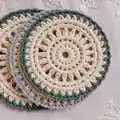
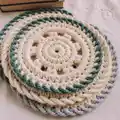
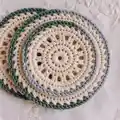
About This Circular Coasters Pattern
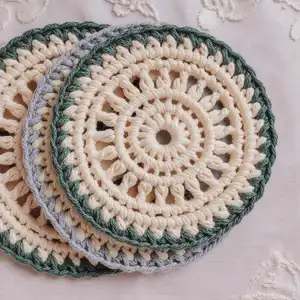
Each coaster features a beautiful color combination with a main neutral tone and contrasting accent colors in silver and sage, creating a sophisticated boho-chic look that complements any home decor style.
Why You'll Love This Circular Coasters Pattern
I absolutely love this pattern because it's incredibly quick to make yet produces such beautiful results. The simplicity of the circular design makes it perfect for practicing your tension and stitch consistency, while the color changes keep things interesting. I find it so satisfying to whip up a set of these coasters in an afternoon, and they make fantastic last-minute gifts. The 100% cotton yarn makes them super absorbent and practical, plus they're machine washable which is a huge bonus for everyday use.
Switch Things Up
I love experimenting with this pattern to create different looks for every season and style. Try using vibrant summer colors like coral, turquoise, and sunshine yellow for a beachy vibe, or go with deep burgundy, forest green, and cream for a cozy autumn feel. You can also play with the texture by using a thicker yarn and larger hook to create oversized statement coasters.
For a modern minimalist look, I sometimes work the entire coaster in one solid color using a beautiful variegated or self-striping cotton yarn. The pattern also works beautifully with ombre effects - just switch shades of the same color family in each round. I've even created holiday-themed sets using red and green for Christmas, or pastels for Easter.
Another fun variation is to add a final round of picot edging or shell stitches for extra texture and visual interest. You could also experiment with different stitch combinations in the middle rounds, like using treble crochets instead of double crochets for a more open, lacy look.
Common Mistakes & How to Fix Them
✗ Not maintaining consistent tension throughout rounds, which can cause the coaster to curl or become uneven in shape and size.
✗ Forgetting to slip stitch at the end of each round, which will throw off your stitch count and cause the pattern to spiral incorrectly.
✗ Missing the chain spaces in Row 3, leading to fewer stitches than required and a smaller, tighter coaster that won't lay flat.
✗ Pulling too tightly when changing colors in Row 5, which creates puckering and prevents the coaster from lying flat on surfaces.